Thursday, July 27, 2017

Always there - technology

A loose definition of technology might be "the ways in which a society uses its collective knowledge and skills to produce goods and services." Or more simply, the "tools" we use to get stuff done.

Historical authors have to research the technologies in place in the time and setting of the book. Fortunately, though, those technologies are not a moving target. A millenium or two ago, people had hammers and wheels and fire--and not much else. Once the author learned what was available in the historical period, she could remain confident about writing their books based on her research.

In the 21st century, technology is exploding at such a rapid pace that a book can be outdated before it reaches bookstores. I am constantly having to decide how to refer to things, like what should I call a phone? Smartphone, mobile, cell, landline? How quickly will a term go out of use? I often use a general term, like "phone", that will likely work for many years to come.

Really, though, it's only natural for books to include technology. Since it's the way we get things done, then it's also the way our (realistic) characters do too. The trick for the author is to get real technology correct--or to get made-up technology believable.

Here are some ways that technology appears in my stories.

Whisper Falls - In Susanna's half of the story, the most cutting edge technology is the grist mill. In the US, the third patent ever issued by the US Patent Office was for a milling system. Susanna's master installs one of those systems--and it nearly ruins him financially.

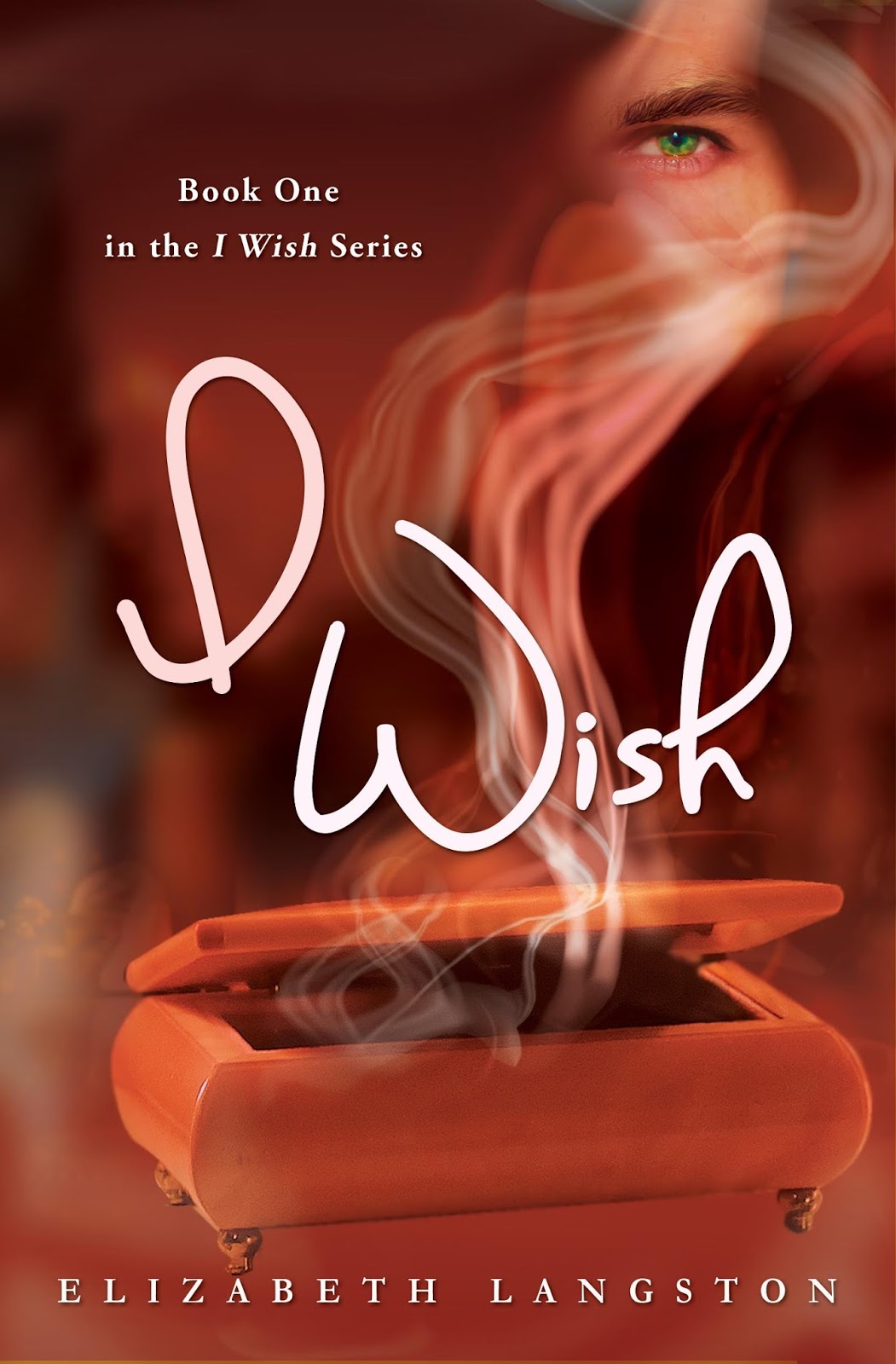
I Wish - Lacey's story points out how the lack of technology can affect a family. Because they need the money, Lacey sells off their phones and computers. She has a difficult time getting homework done--because she doesn't have a laptop at home to help.

Wishing for You - Kimberley has a memory disability. This book describes all of the technology that she has to use in order to remain safe, to remember details, and to track what she's done in the past and will be doing in the future. Kimberley has become dependent on her technology, and that concerns her.

The Possibility of Somewhere - Like Lacey, Eden's family is too poor to have computers and smartphones. When Eden needs access to computers, she depends on her high schools computer lab or media center.

Fade to Us (releasing in Feb 2018) - The heroine, Brooke, is from a middle class family. Her family members have computers and phones. Her stepfather is a geospatial engineer; his business is immersed in new and expensive technologies for mapping terrain. Brooke earns income by managing websites and doing data analysis on spreadsheets of data. In this book, technology really does match its definition: it's how Brooke and her stepfather use their knowledge and skills to produce services.

Thursday, July 20, 2017

Whisper Falls is included in a giveaway of Historical Romance eBooks. Two grand-prize winners will receive all 23 ebooks.  There will be 23 other winners who will receive one randomly-selected ebook from the list.

So what's the catch?  People who enter must be willing to have their email address shared with all 23 authors. Authors will invite each entrant to subscribe to their newsletter mailing list. The entrant can simply ignore (or refuse) the invitation.

So if you know any readers who love historical romance and enjoy discovering new authors, here is a great opportunity.


Win up to 22+ Historical Romance eBooks!

(2) Grand Prize "Gift Baskets" of ALL eBooks!
(22+) Winners of Individual eBooks (randomly selected titles)

Wednesday, June 21, 2017

Favorite links for writers - historical research

I love research, possibly too much because I'll immerse myself in details and sometimes delay writing the book. With Whisper Falls (which is half-set in 18th century North Carolina), I researched the colonial and post-revolutionary periods in America for six years before I started writing the book.

Along the way, I've collected many websites and blogs that have helped me get the details right. It's important to trust your sources, and I feel like authors can trust these. (Some have been contributed by author friends. Thank you!)

Warning: This post will be heavy on references to USA history and, in particular, North Carolina history.


Daily Life


Website
Type of content
Metropolitan Museum of Art art work for fashions, furnishings, locations/landscapes
Colonial Williamsburg wonderful place to visit for living history; it also has amazing
content on its website on fashion, medicine,
furnishings, jobs, etc.
Mount Vernon educational resources about George Washington
Colonial Quills blog for writers passionate about Colonial America
Costume Gallery fashion through the ages
Historic food photos and recipes for historic foods in Britain and
Europe
British Museum everything
Bloomsbury Heritage reprints of historical books, maps, etc
Costume Gallery fashion through the ages


People and Events


Website
Type of Content
North Carolina History Project lists people, events, and regions from 1585-present
for the state of North Carolina
Archives:
US
UK
Scotland
North Carolina
historical documents and records, such as newspapers,
wills, court proceedings
Etymology Online A site for discovering a word's origins; it's great for
making sure that the vocabulary you want to use was in
existence in your period of history
Old Bailey Online Court proceedings from London 1674-1913
People History Type in a date in history and learn what happened that day
Library of Congress
Digital Public Library of America
everything and more


About Wikipedia--
I am cautious about using Wikipedia, but I still think it's a great resource. It can give you a good, basic overview of events or people in history. Even better, though, are the resources and references listed at the bottom of the page.

Do you have any links to add?  I'd love to include more links to great historical information--so leave them in the comments!


Friday, June 2, 2017

Kobo sale in CA, AU, US for Whisper Falls

Whisper Falls is on sale for 99cents on the Kobo YA Great Reads sale page. This promotion is offered in Canada, Australia, and USA. So if you have any friends who haven't read it yet, now is a good time.

Also, if you have an account on Kobo, please consider leaving a rating (no words necessary) for Whisper Falls.  Only 2 readers had done that so far, and they both gave it a one-star.  That is their right, of course; not everybody will love the book. However, many have enjoyed this series, and it would be too bad if new readers, shopping for a story, are pushed away by a one-star rating. (Interestingly, Whisper Falls 2 and 3 have great ratings on Kobo.)


Friday, May 12, 2017

Favorite links for writers - self-publishing a book

The production of a book (transforming a manuscript into an actual product that readers can hold in their hands or read on an electronic device) requires time, effort, patience, and perseverance. Traditional publishing houses handle the details of book production for their authors. But if you are self-publishing, then you are the publisher; you own all details.

I have self-published 7 books and learned a lot along the way. In this post, I list some helpful blogs, websites, and publishing professionals that I've discovered. My thanks to anyone who sent their favorite links to me; I've included them here.

Overview of my self-publishing experience

In 2015, a small press reverted my rights on 3 books (the I Wish series). I worked hard to turn those books around fast, 8 weeks or less. Looking back, I don't really know why I thought it was so important, but I did. In putting myself under that pressure, I missed out on the opportunity to connect with the pioneers of self-publishing--who had already figured out the process. Please don't make my mistake!

I wrote a blog post about all of the Fun Times with Self-publishing that I experienced.  Feel free to read and enjoy. Although it was originally written in March 2016, I update it to keep it current. Self-publishing and the book market changes quickly--and book production is definitely improving every day.


Self-publishing blogs and support groups

  There are thousands of these groups to help you navigate the challenges of self-publishing. Here are a few sites that I've found helpful:
 Facebook and Goodreads also have many author support groups, so search both sites and see if any feel right to you.


Book cover design

  Your book cover is the best marketing tool that you have. Gorgeous covers will help sales. Bad covers will hurt (or destroy) sales. Ask your writer friends for recommendations or check out cover designs and see what appeals to you. Your genre/subgenre will make a difference too, as they often experience trends.
  Covers can cost from $100 up to $1000s, so research is key. Some suggestions for cover designers to consider include:


Ebook formatting and layout

The internal layout and formatting of your book requires technical knowledge of ebook publishing formats, like MOBI/AZW and ePub. If you have a good understanding of these formats (or HTML), you might be able to do the work on your own. I'm a software engineer in my day job, so I do my own formatting and stick to the basics. But I suspect that most indie authors seek help, such as:


Professional editing

If you want to sell a quality book, you need a good editor to point out your flaws. Not just spelling and grammar mistakes--but holes in the plot, inconsistencies in characters, and continuity errors.

Professional editors are not cheap, and the costs range widely depending on their education and experience. Seek recommendations from other writers. If you find an editor who you want to hire, see if they will edit a sample chapter. It will give you insight into whether their style aligns with yours.

I've only ever used one editor, Laura Ownbey, so she is the only one I can recommend from personal experience. She is amazing!


If you have any links you would like to suggest, please add them in the blog comments or send them to me through my website.


Thursday, March 23, 2017

Kindle countdown deal for I WISH


I WISH is on sale on Amazon, as a Kindle Countdown deal.

The deal lasts through next Wednesday.

If you know someone who might love to discover a YA genie story, now's a good time to let them know!

Friday, March 10, 2017

Always there - satisfying ending

I love stories with a happily-ever-after. 90% (or better) of the books I read have an HEA. That's also what I like to write.

Recently, I asked some friends for author recommendations on a genre called Women's Fiction. They gave me many suggestions, such as Liane Moriarity, Sarah Addison Allen, and Kristin Hannah.  I checked out their booklists and reviews. Each author sounds as if she writes beautiful books that readers love. But further research showed that their books often have sad, dark, or unsettling endings. I'm not sure I'm up to that.

It hasn't always been this way. I haven't always insisted on reading books (or watching films) where the villains receive justice and the girl rides off into the sunset with her adoring guy. But the real world has grown so much more complicated, certainly more for my daughters' generation that it was for mine. I want to focus on reading and writing stories that give me an escape from the bad stuff.

I won't pledge to give readers the ending of their dreams, the ending where all problems cease and life magically becomes perfect. I do, however, pledge to leave my protagonists on the road to happiness. There will be hope.